Designing a home on a steep slope can feel intimidating at first, but modern concrete architecture has transformed this challenge into one of the most exciting opportunities in contemporary home design. Instead of fighting the terrain, today’s architects embrace it—creating bold, sculptural houses that feel dramatic, luxurious, and deeply connected to their surroundings.
Concrete is the hero material for sloped homes. Its strength allows homes to anchor into hillsides, cantilever over valleys, and flow naturally with uneven land. When combined with glass, steel, and warm natural textures, concrete homes on steep slopes feel modern yet timeless—minimal but emotionally powerful.
In this article, we explore 10 amazing modern concrete house ideas specifically designed for steep slopes. Each concept is realistic, buildable, and highly inspiring for Pinterest audiences who love architectural beauty, smart layouts, and breathtaking views.
1. Cantilevered Concrete Cliff House
One of the most iconic solutions for steep slopes is the cantilevered concrete house. Instead of leveling the land, the home extends outward over the slope, supported by reinforced concrete beams anchored deep into the hillside. This creates a floating effect that feels bold and futuristic.
Inside, the house often features open-plan living areas with floor-to-ceiling glass walls facing the view. Bedrooms are typically tucked into the hillside for insulation and privacy, while social spaces project outward, maximizing natural light and scenery. This design not only looks dramatic but also minimizes excavation and preserves the natural landscape.
The contrast between raw concrete and expansive glass makes this style incredibly popular on Pinterest, especially for ocean cliffs, mountain ridges, and forested hills.

2. Multi-Level Concrete Terrace Home
A terraced concrete house follows the natural slope step by step, creating multiple levels that cascade down the hill. Each level functions like a platform, often with its own outdoor terrace or garden.
This design works beautifully for families because it naturally separates spaces. Living areas may sit on the upper levels with the best views, while bedrooms and private areas occupy lower terraces. Concrete retaining walls become part of the architectural language, blending structure with aesthetics.
Terraced homes feel grounded and harmonious, especially when paired with greenery, water features, and warm wood accents. They photograph beautifully from aerial angles, making them ideal for Pinterest boards focused on luxury hillside living.

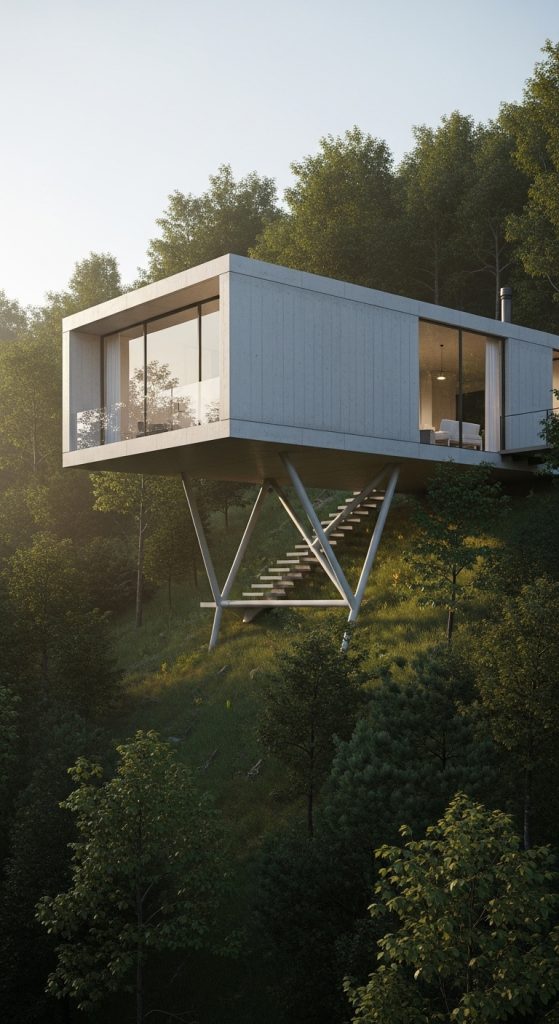
3. Minimalist Concrete Box House on Stilts
For extremely steep slopes, building directly on the ground isn’t always practical. A modern solution is a concrete box house elevated on stilts or columns. This reduces ground disturbance while creating a light, floating appearance.
The structure is usually simple—clean lines, rectangular volumes, and a restrained material palette. Concrete columns anchor the home securely, while the main living box appears to hover above the terrain.
This style is perfect for minimalist design lovers. The simplicity allows the landscape to take center stage, and the elevated position often results in breathtaking panoramic views. It’s a smart, elegant response to difficult topography.
4. Concrete Split-Level Hillside Residence
Split-level designs are ideal for sloped land, and when executed in concrete, they feel strong, modern, and seamless. Instead of full floors stacked vertically, half-levels gently step up or down with the terrain.
This creates a dynamic interior experience where spaces flow naturally into one another. Short staircases connect areas, maintaining visual openness while subtly defining zones. Concrete floors, walls, and ceilings unify the design, giving the home a sculptural feel.
Natural light is often introduced through skylights, clerestory windows, and glass walls positioned at different elevations. This design feels both practical and artistic—perfect for modern families who want functionality without sacrificing style.

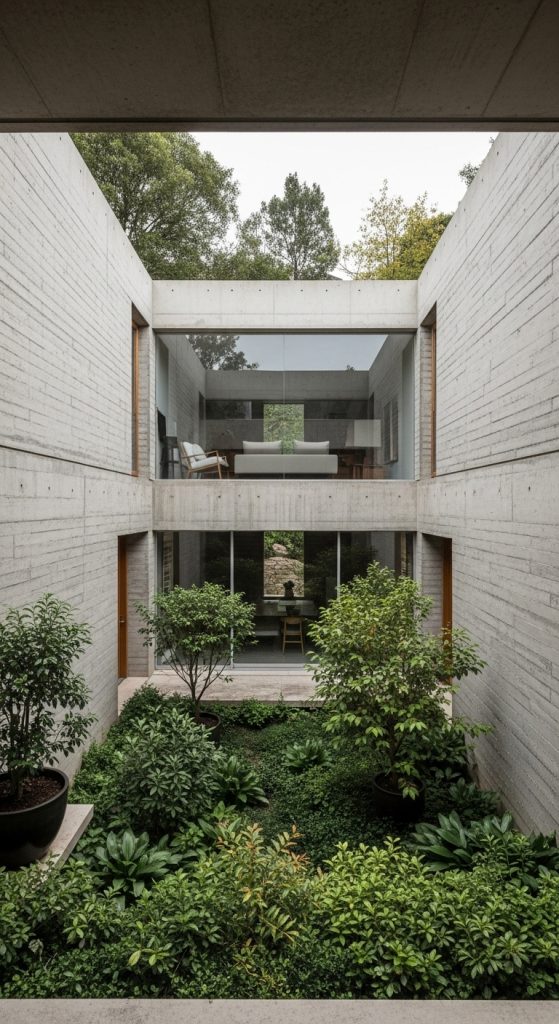
5. Concrete Courtyard House Embedded in the Slope
Some of the most beautiful slope homes are partially embedded into the hillside. A concrete courtyard house uses the earth itself as insulation while opening inward to a private outdoor space.
From the street side, the house may appear modest or even hidden. Inside, however, it opens into a dramatic courtyard filled with light, plants, and sky views. Concrete walls frame the space, creating a calm, protected environment.
This design is ideal for hot climates or locations where privacy is important. The courtyard becomes the heart of the home, balancing the heaviness of concrete with softness and life. Pinterest users love this concept for its serenity and architectural depth.
6. Inverted Concrete House with Rooftop Entry
On very steep slopes, access often comes from the top rather than the bottom. An inverted concrete house flips the traditional layout—entry and parking are located on the upper level, while living spaces descend downward.
Concrete makes this possible by supporting large spans and retaining walls. As you move down through the house, spaces gradually open toward the view, ending in expansive living areas with glass facades.
This journey-like experience feels luxurious and cinematic. Rooftop gardens, green terraces, and hidden entrances enhance the modern appeal. It’s a clever, visually striking solution that works beautifully on narrow hillside plots.

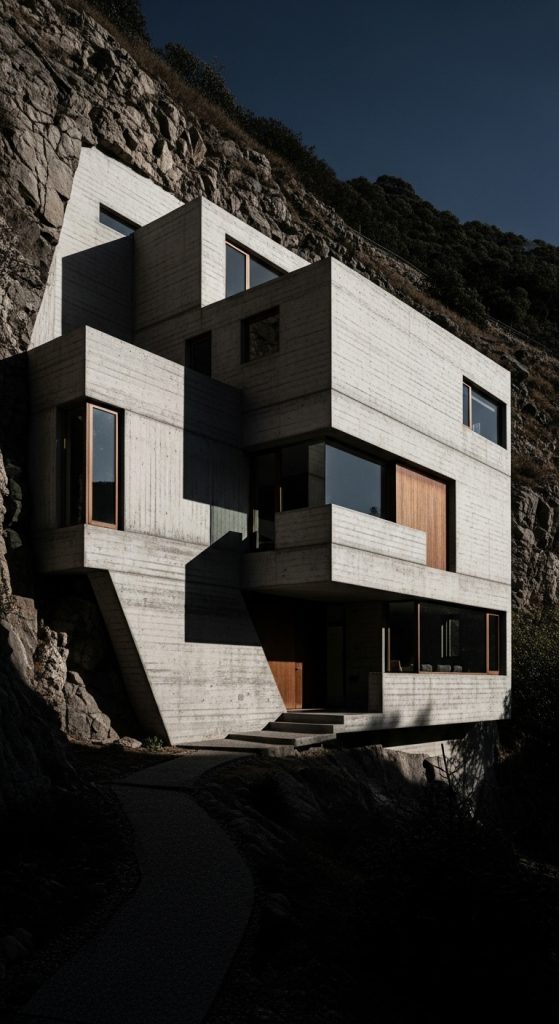
7. Brutalist-Inspired Concrete Slope House
Brutalist architecture finds a natural home on steep slopes. Raw concrete textures, bold geometric forms, and heavy volumes feel powerful when carved into a hillside.
These homes often feature deep overhangs, recessed windows, and dramatic shadow play. The slope allows the building to feel monumental without overwhelming its surroundings. Interiors balance the rawness with warm materials like wood, leather, and soft lighting.
Brutalist concrete homes are trending again on Pinterest because they feel authentic, fearless, and timeless. On a slope, they become architectural statements that celebrate structure and honesty.
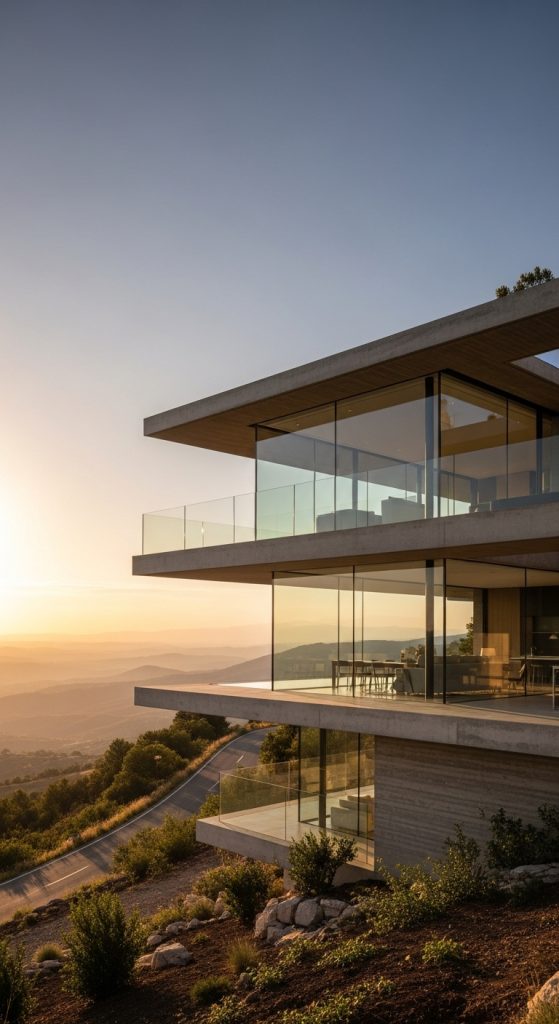
8. Glass and Concrete Panorama House
When the slope offers an incredible view, the architecture should honor it. A glass-and-concrete panorama house uses concrete as a strong frame for expansive glass walls that face the landscape.
Concrete slabs form floors and roofs, while glass dissolves boundaries between inside and outside. The slope allows the home to sit higher, giving unobstructed views of valleys, oceans, or cityscapes.
This design feels luxurious yet restrained. Concrete provides solidity and privacy from the uphill side, while glass opens the downhill side completely. It’s one of the most saved styles on Pinterest for modern hillside homes.
9. Sustainable Concrete Earth-Sheltered Home
Sustainability meets modern design in earth-sheltered concrete homes. Built partially underground on a slope, these houses use the earth’s natural insulation to regulate temperature.
Concrete walls retain the soil while opening selectively toward sunlight and views. Green roofs blend the house into the landscape, reducing visual impact and improving energy efficiency.
Inside, the atmosphere feels calm and protected. Light wells, courtyards, and large windows prevent the space from feeling enclosed. This approach is perfect for eco-conscious homeowners who still want a bold, modern aesthetic.

10. Sculptural Concrete Stair-Form House
This concept turns the slope itself into the design inspiration. The house is shaped like a series of concrete steps, echoing the angle of the hill.
Each “step” contains a functional space—living room, kitchen, bedrooms—while rooftops become terraces for the level above. The result is a highly sculptural form that feels custom-made for the site.
This design maximizes outdoor space, views, and natural light. From a distance, it looks like an extension of the landscape itself. It’s visually striking, highly Pinterest-friendly, and perfect for showcasing modern architectural creativity.

Final Thoughts
Modern concrete houses on steep slopes are more than just homes—they are architectural experiences. They prove that difficult terrain doesn’t limit creativity; it amplifies it. With the right design approach, steep land becomes an asset rather than a challenge.
Whether you’re drawn to floating cantilevers, terraced gardens, or earth-sheltered serenity, concrete offers the strength, flexibility, and beauty needed to bring these visions to life. These ideas aren’t just visually stunning—they’re realistic, functional, and deeply inspiring.