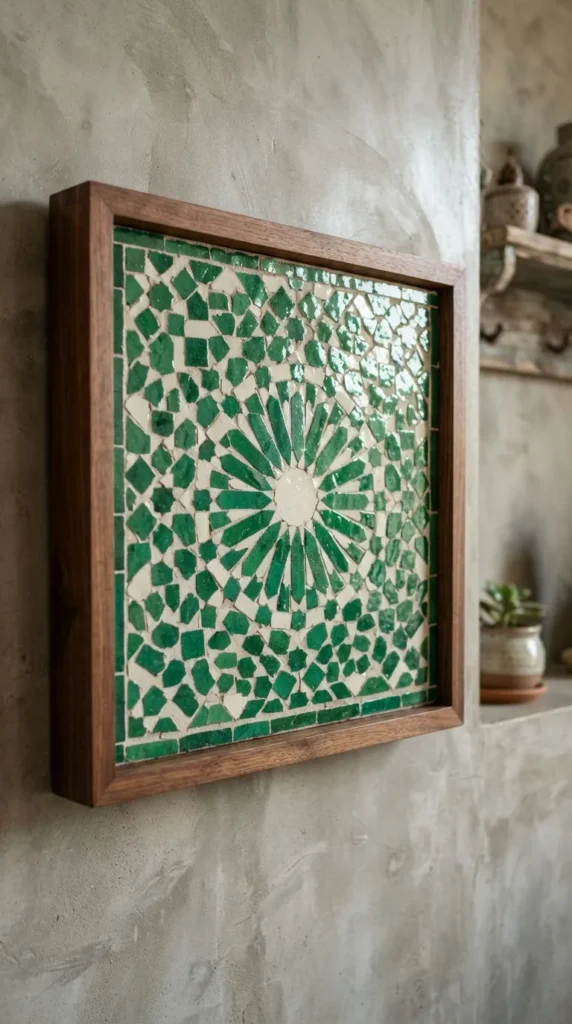
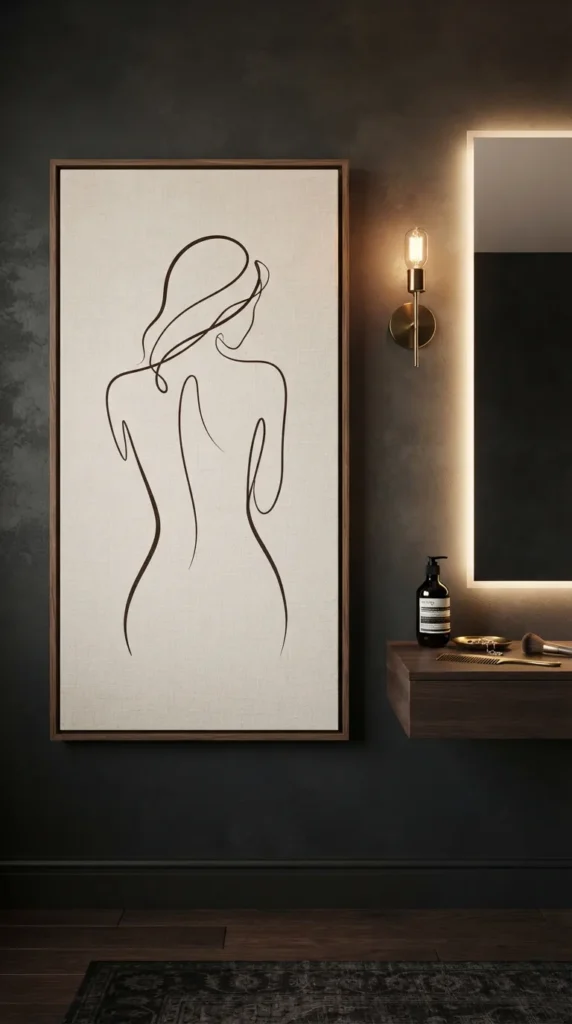
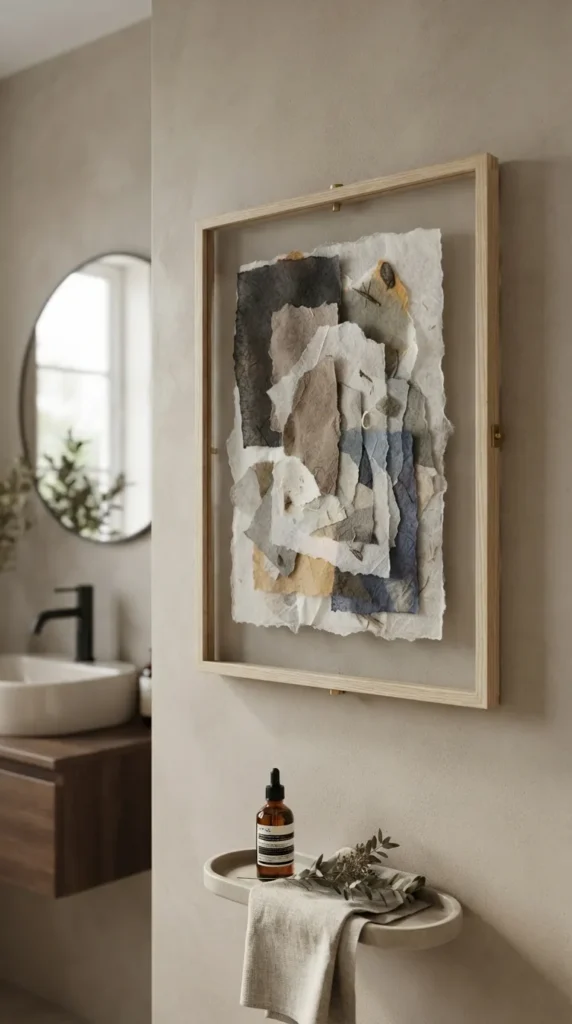
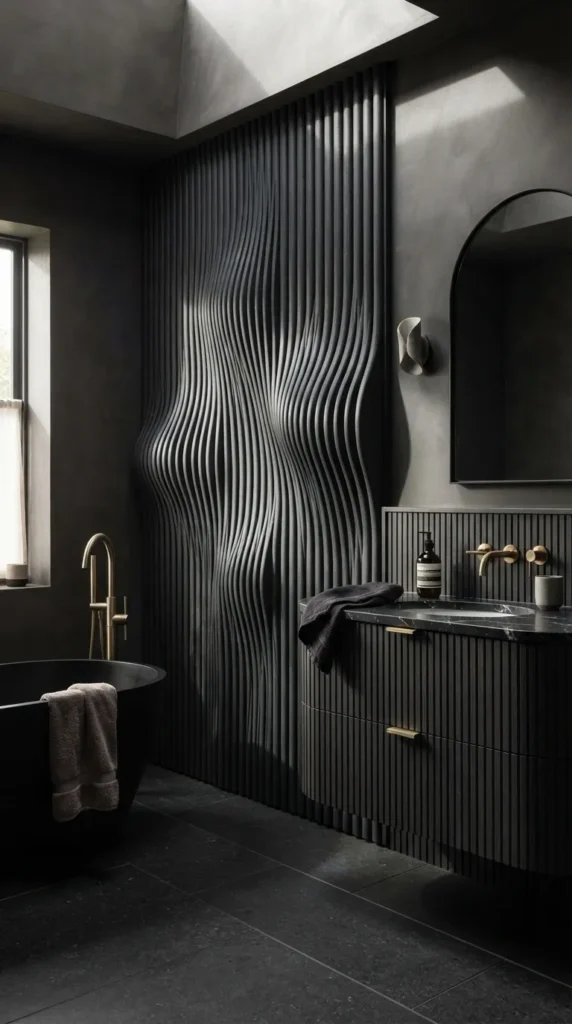
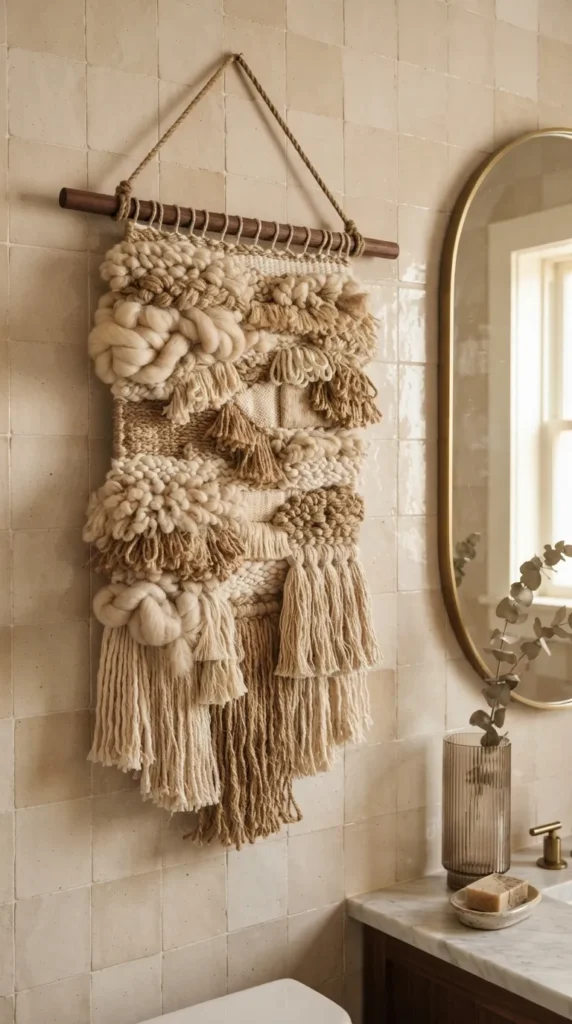
6. Woven Neutral Linen & Jute Fiber Art Tapestry
Natural fibers introduce tactile warmth, softness, and acoustic dampening to hard tile surfaces.
- Introduction: Modern bathrooms often feature stone, porcelain, glass, and metal, which can result in an echoey, cold room. A structured, minimalist woven tapestry introduces tactile fiber textures, grounding the space in organic simplicity.
- What This Idea Means: Modern fiber art focuses on negative space, varied yarn densities, and geometric forms rather than busy patterns. It softens hard architectural angles and creates a calming, tactile balance.
- How to Make It:
- Set up a simple wooden frame loom warped with strong, unbleached cotton warp thread.
- Weave a foundation of hand-spun raw ivory merino wool roving, thick natural jute twine, and braided linen cord.
- Use varying tapestry techniques—such as dense plain weave, Soumak braids, and loop pile rya knots—to build layered geometric zones.
- Keep the palette neutral: cream, unbleached taupe, wheat, and charcoal.
- Carefully cut the warp threads and tie them onto a sleek, solid walnut or blackened oak dowel.
- Treat the completed textile with a non-aerosol fabric water-repellent spray to prevent moisture absorption.
- Tips and Variations:
- Variation 1: Integrate polished travertine or raw stoneware beads along the fringe to connect with surrounding stone elements.
- Variation 2: Keep the weave strictly uniform and mount it flat inside an acrylic shadow box for a cleaner, modern finish.
- Ventilation Note: Ensure your bathroom has adequate fan ventilation to keep natural fibers dry between uses.